06/09/19: Page Origin
When I bought the house, it was surrounded by a wooden fence.
Several years later, I got notice from the city that the back fence was leaning too far and must be repaired.
Well, I really don't like wooden fences (too much maintenance), and since one of my long term objectives was to reduce maintenance, I opted to replace the wood fence with a 5 foot high chain link fence.
We keep our yard nice and I don't mind other folks seeing it.
I called J-N Fence co. here in Mesquite, got a quote and let them do the job.
They have been in Mesquite many years so I figured they'd know what they were doing.
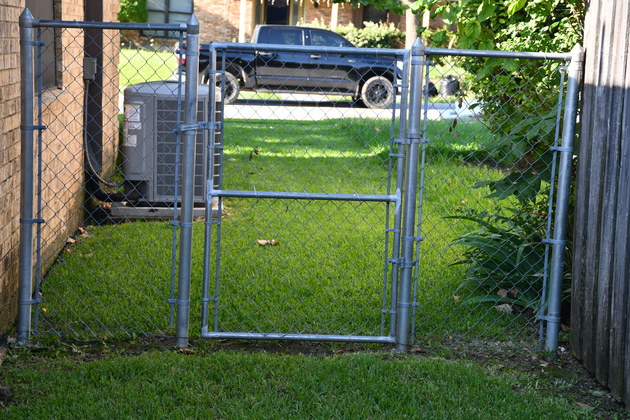
We have 3 gates, two of which work like a charm, but the West gate is problematic.
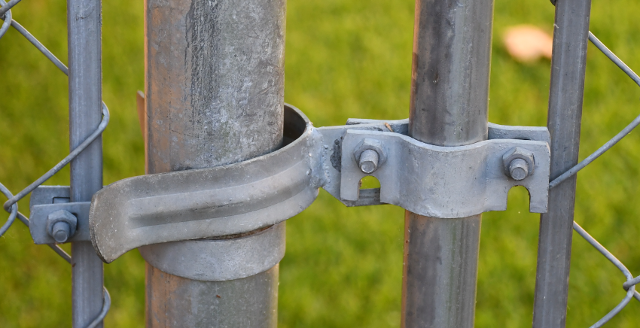
When the gound drys up it subsides and the West gate's terminal fence post, on the latch side, leans closer to the gate to the point the latch doesn't have room to operate.
I think the terminal post on the house side of the short fence from the gate to the house is anchored to the house's foundation which doesn't move as much as the ground during our wet and dry spells.
In any event the top of the short fence leans away from the house as the ground drys up causing the latch gap between the fence and the gate to narrow.
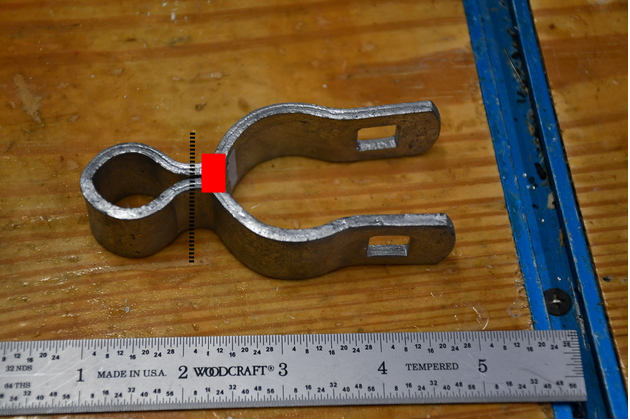
I couldn't find the kind of 1-3/8" strap clamp I wanted so I bought a 1-3/8" hinge and modified it by welding the pinched spot and cutting off the hinge pin loop.
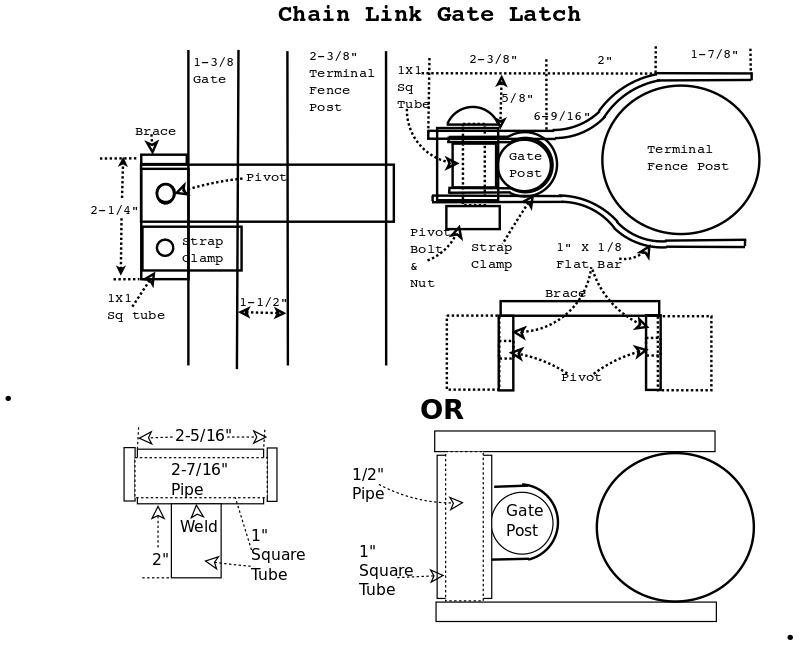 Material
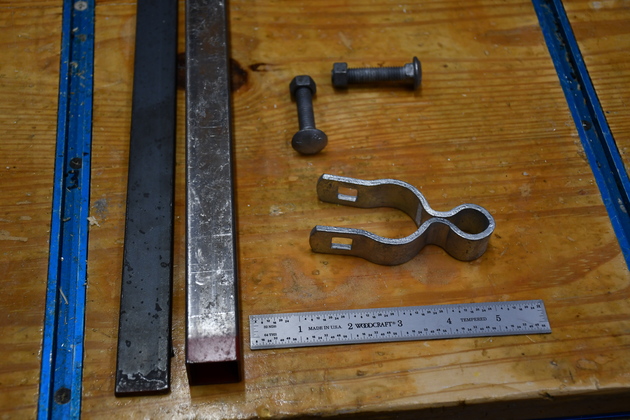
|
1 x 1/8" flat steel bar, 1 x17quot; sqr tube, 3/8" carriage bolts, and gate hinge clamp.
|
|
|
Hinge clamp, notice it is made of "beefy" stuff.
Note the hinge pin loop on the left, and "pinched" area between the hinge pin loop and the main clamp loop.
I'm going to weld it solid in the "pinched" area (red rectangle) then cut off the hinge pin loop (black dotted line).
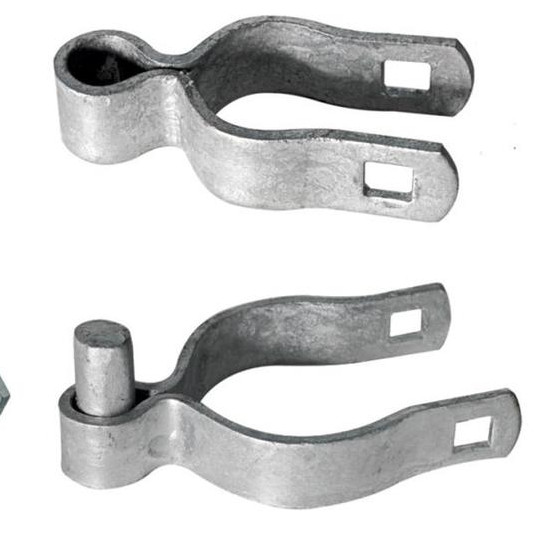
Check the Hinge pin in the pic below of both clamps.
|
|
|
Assembly